Tree Health & Emerald Ash Borer Care in Rochester, MN
Emerald ash borer is established in Olmsted County, which means every untreated ash tree in Rochester is on a clock. The question is never whether the borer finds your ash — it is whether the tree is worth defending, and what you want to spend finding out. This page exists to give you that read honestly, including when the honest answer is 'take it down.'
How the read works: canopy dieback, bark splitting and shedding, woodpecker damage, and the D-shaped exit holes and S-shaped galleries under the bark tell the story. An ash in the first year or two of decline, in a spot you care about, can be a treatment candidate. An ash that has lost a third of its canopy is usually a removal conversation — treatment rarely brings those back, and dead ash goes brittle fast, which makes the eventual removal slower, more hazardous, and more expensive.
We do not sell treatment programs. What we do is the assessment — free, in person, with the findings shown to you on the tree — and removal when removal is the call, priced on the published removal band ($11–$19 a foot, hazard multiplier for a brittle dead ash) in writing. If your ash is a treatment candidate and you want it treated, we will tell you what to ask a treatment provider and what the recurring cost generally runs, so you can decide with the whole picture.
Ash is not the only health conversation. Oak wilt, Dutch elm disease's long shadow, and a generation of aging silver maples all show up in these visits. The pattern is the same: look in person, show you what we see, price the paths in writing, and let you decide.
Signs Your Ash Is in Trouble
Thinning at the top first — the canopy dies back from the crown down. Then bark splits lengthwise, woodpeckers strip pale patches hunting the larvae, and small D-shaped holes appear where adults exited. Suckers sprouting from the trunk and roots are the tree spending its last reserves.
Any one of those earns a free look. The earlier the read, the more options you actually have — an ash read in year one is a decision; an ash read in year four is a removal quote.
Treat or Remove: the Honest Math
Treatment is a subscription, not a cure — injections every two years for the life of the tree, at a cost that adds up toward removal money over a decade. For a signature ash shading the house, that can be the right buy. For one ash in a fence line of six, it almost never is.
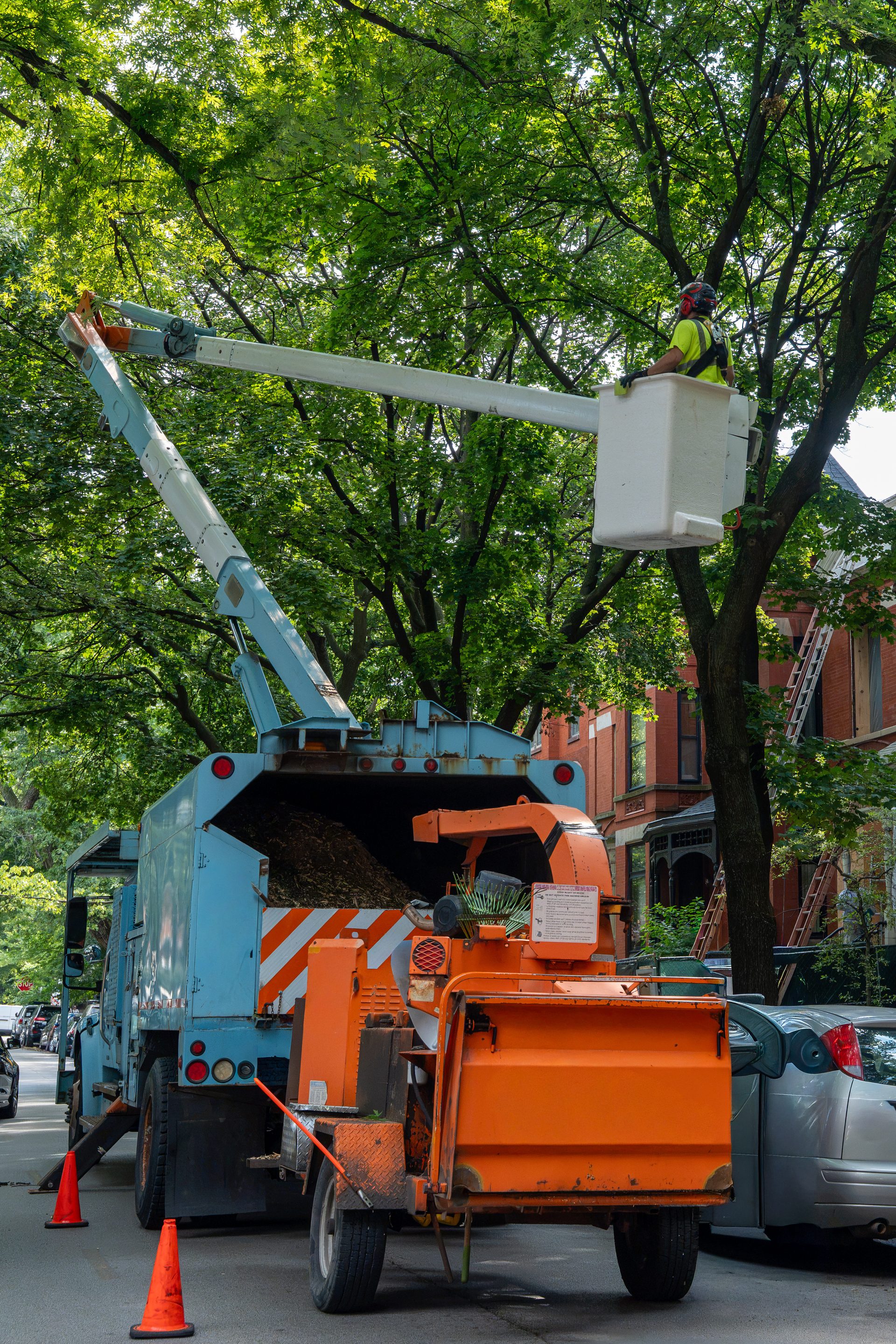
Removal is one price, in writing, and it ends the question — plus it happens while the tree can still be climbed and rigged safely. The hazardous version of this job — a fully dead, brittle ash over a roof — is the most expensive way to buy the same removal. Earlier is cheaper in this trade, and ash is where that is truest.
How do I know if my ash has emerald ash borer?
The reliable signs together: canopy thinning from the top, bark splitting or shedding in strips, heavy woodpecker damage, and — conclusive — D-shaped exit holes or S-shaped galleries under lifted bark. One sign can have other causes; the cluster means borer. The free visit reads your tree and shows you what we find.
Is treating an ash worth it?
Sometimes — a healthy, high-value ash caught early, in a spot where its shade matters, can be worth defending. Treatment repeats every two years indefinitely, so run the ten-year math against the one-time removal price. We will give you both numbers in writing and no pressure either way.
Why does a dead ash cost more to remove?
Dead ash goes brittle — it cannot be climbed or rigged the normal way because the wood cannot be trusted to hold. The work slows down, sometimes needs a bucket or crane, and prices with the hazard multiplier (x1.30 on the removal band). Taking an ash down while it is declining instead of dead is the same job at the safer price.
Ready to price your tree? The estimate visit is free — and the price comes in writing.